Wednesday, January 4, 2012

On Not Reading


To be with the one I love and to think of something else: this is how I have my best ideas, how I best invent what is necessary to my work. Likewise for the text: it produces, in me, the best pleasure if it manages to make itself heard indirectly; if, reading it, I am led to look up often, to listen to something else. I am not necessarily captivated by the text of pleasure; it can be an act that is slight, complex, tenuous, almost scatterbrained: a sudden movement of the head like a bird who understands nothing of what we hear, who hears what we do not understand.
Roland Barthes, The Pleasure of the Text

For being an easily distracted person, I've always sought out somewhat distracting environments in which to read. Some of this impulse is nostalgic -- reading to the sound of a football game on TV or clattering dishes, for example, are comforts from childhood -- and sometimes it feels necessary to have the extraneous noise to tune out to give me incentive to narrow my focus.

Last night, though, while reading what is so far a very good book in such an environment, I suddenly sat up straighter with a startled feeling, like I'd just come around a corner in my own brain and caught myself doing something that always makes me feel guilty. People don't often admit to this, but they do it too, right? I realized that for at least a few pages, I hadn't really been reading.

The practice that I'm referring to is different from drifting off while reading, staring at the page thinking other thoughts. I was, actually, moving my eyes from line to line. Probably every sixth sentence entered my brain in a real, resonating way. I turned the pages at my regular pace. I wasn't really listening to anything going on around me. I wasn't thinking about anything else in particular, just occasional thoughts coming and going, like they always are. I was simply reading without reading.

I'll be honest: this happens a lot.

This confession would probably confuse some of the people who think of me as a reader. I've often been told how absorbed I appear by books, how specifically and passionately I speak about them, how much I seem to enjoy reading, and it's true -- there are few things in the world I like more. But, just like sometimes we read to escape, sometimes to learn, sometimes to entertain, I think we must admit that sometimes we read just to be reading, and that this sort of reading is not an exclusive mental activity. There is shame in this, like we're doing it wrong, right? But is this kind of reading less valuable than any other? I enjoyed the experience, I felt satisfied with my progress in my book (which, no, I will not name, lest I recommend it here sometime in the future and, despite my pleas that you understand this phenomenon, you think that I'm a faker and the book must be boring) and put it down with a desire to pick it up again soon. I'm not going to re-read those sentences I missed. I didn't need them. The ones I did need found their way in. Am I alone here? Or is this what reading is, and the part that I've been doing wrong is feeling like I'm always supposed to be doing it better?

Monday, January 2, 2012

Best-selling books of 2011

Here are the ten best-selling books at Green Apple for 2011 (with links to eBooks, just in case you're tying to fill up your new device).
  1. The Hunger Games by Suzanne Collins (young adult fiction, soon to be a movie). eBook
  2. A Game of Thrones: A Song of Ice and Fire by George Martin (the fantasy series adapted for HBO). eBook
  3. 1Q84 by Haruki Murakami (was it the free beer and tacos or just the pent-up demand for Murakmai's magnum opus?). eBook
  4. A Visit from the Goon Squad by Jennifer Egan (Green Apple was mentioned by name in the advance reading copy, only to be heartlessly edited out, alas). eBook
  5. A Clash of Kings by George Martin (as above). eBook
  6. Infinite City by Rebecca Solnit (we love when an eclectic university press book hits the top of our charts).
  7. Bossypants by Tina Fey (no one had ever heard of her until we started handselling this, right?). eBook
  8. Just Kids by Patty Smith (the Pulitzer didn't hurt). eBook
  9. A Storm of Swords by George Martin (yep, another one). eBook
  10. A Feast for Crows by George Martin (and another). eBook
Since George Martin nabbed four spots, let's list one more, eh?

11. Go the Fuck to Sleep by Adam Mansbach (proving that even if you can read a PDF free online, you still want the book. Or that parents today are horrible monsters).

No predictions for 2012, except maybe that this great book, which I'm currently devouring, will be much talked about. Now back to the stack of forthcoming books. . . .

Saturday, December 31, 2011

Happy New Year!

We send you out into the night and into 2012 with our top ten bestselling Staff Favorites of the past year. Thank you for continuing to shop at Green Apple. We look forward to sharing some new favorites in the year(s) ahead.

With an honorable mention to a plucky favorite that missed out by a few copies to the Eliot Weinberger book above. (Though we're open for 3 more hours if anyone wants to see Barbara Comyns' novel crack the top ten...)

Friday, December 30, 2011

The Best Books We Read 2011

I read far fewer books in 2011 than I have in quite some time. I was busy and restless. Frustrated, I started and quickly stopped a record number of titles. In the end, I did manage to finish some, and on the whole they left me quite satisfied. I fell in love with a classic that I was prepared to hate, savored yet another reprint by one of my favorite authors, finally read (and thoroughly enjoyed) Tom McCarthy, and drooled over many, many, many fantastic cookbooks. Thus, it may go without saying that the two books I’ve chosen to highlight here are among several favorites from the past year. Surprisingly, these books have central themes that were (luckily?) somewhat foreign to me: death, Jesus, two types of hospitals, and schizophrenia, respectfully. Read on to find out more.


Us, by Michael Kimball is an understated, yet incredibly intimate story of aging, illness and death. The premise is quite simple: a man awakes one morning to find his wife beside him, no longer breathing. What follows is a complex story of the grim reality of what happens when we are met with mortality—that of our loved ones and of ourselves. While, by nature, the subject matter isn’t the endorphin releasing, warm-fuzzy type that I tend to look for in places other than books, this novel is an exceptionally tender portrait of the harsh realities of human existence, and of love. This book will make you think. I might make you feel a little crazy and a little sad. But it is completely worth it.

*Us is currently on our shelves, despite what our website may say. Call to reserve a copy, or come in to see it for yourself.


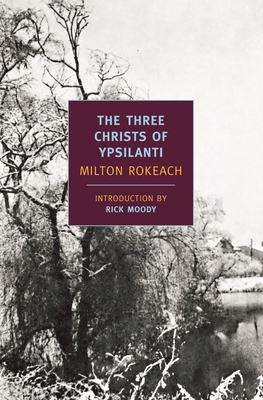
One of my other favorites from this year was the NYRB reprint of The Three Christs of Ypsilanti. I picked this up because the premise was just too intriguing to ignore. In the late 1950’s, three schizophrenic patients in the Michigan state hospital system shared one very distinct characteristic. They each claimed to be Jesus Christ. Social psychologist Milton Rokeach brought these patients together at the now demolished Ypsilanti State Hospital, where he performed experiments and studied the group for a number of years. Though this is nonfiction through and through, the larger than life personalities, and the pure emotive qualities of the three Christs are certainly the stuff of novelists’ dreams. From a psychological standpoint, this book provides a fascinating explanation and interpretation of the basic functions and modalities of identity and individuality. More than that, the three Christs call into question the very meaning of the term ‘mentally ill’, and the ways in which individuals, physicians, and the state view, treat, and interact with those diagnosed as such. By the end of the book, I found myself wondering exactly which players in this bizarre situation truly saw themselves as Christ; the schizophrenic patients, or the doctor who attempted to manipulate, by morally questionable means, the lives of three men deemed by the state to be clinically insane.


Thursday, December 29, 2011

December's Apple-a-Month Selection, Revealed

As the dust starts to settle from the holiday madness, there's finally time to unveil our December Apple-a-Month Club selection, Leaving the Atocha Station by Ben Lerner (Coffee House Press). Anyone who subscribed by December 5th got this smart, poignant, and funny novel in the mail mid-month, and by now even those who were forced to let it sit under the tree for a few weeks have had the chance to dig in, so we'll share our pitch for the book (penned by Sparks) with the rest of you:


Ben Lerner's debut novel is a smart and ironic account of cultural, linguistic, and personal dislocation. Chronicling the rather unextraordinary adventures of a young American poet in Madrid (there under the false pretenses of writing a poem about the Spanish Civil War), Leaving the Atocha Station is a comedic portrait of the artist as a bundle of failures. Much more than an attempt to understand what poetry means in the early 21st century, Lerner's novel is an attempt to figure out what it means to be human.

December also brought a jump in new subscriptions, many of them gifts, which is basically the best Christmas present we could have asked for (combining a few of our favorite things, after all: reading new books, picking good books for you to read, and surprises). Those folks can be on the lookout for the next new fiction title of our choosing in the mail in mid January. Don't even think about trying to get us to tell you what it is. Even though we totally already know. Not even for a bribe, unless you have a really really good bribe. Bribery attempts will be graciously accepted.

Wednesday, December 28, 2011

The Best Books We Read 2011

Kevin D.'s pick:


My favorite book of 2011 arrived just under the wire on our free advances shelf in November. As with Thomas Frank’s last book, The Wrecking Crew, I’m telling everyone to read his newest, Pity the Billionaire (available in January), a harrowing, scrupulously sourced and footnoted report delivering an incisive examination of, as he puts it, the “purified market populism of the right-wing renaissance.”

Frank offers astute insight into what motivates the naïve and xenophobic Tea Ninnies aiming to “take our country back,” fearing burdensome, invasive regulation toward modest small business owners thus rallying for toothless oversight by the Federal Reserve, Treasury Department and SEC, much to the delight of fund managers at JP Morgan.

Frank delivers a seething survey of the “funhouse mirror of contemporary conservatism” where unions “oppress” workers and what’s left of the middle class became a cheering squad for paid-for politicians and the industrialist Koch Brothers, all aided by the stealth astro-turfing machinations of Dick Armey, and Glenn Beck’s socialist-baiting histrionics.

Democrats whistle as workplace unionism dwindles, while a bizarrely aloof President Obama capitulates and compulsively offers olive branches to Rep. John Boehner and his bullies.

The last, chilling, four-page chapter, “Trample the Weak,” foresees a future where the market-minded moneyed interests, no longer fearing incorruptible government agencies, are free to call highways and parks--wasteful subsidies, and FEMA and Medicare are just the unfortunates’ power grab from big government.

This is not bedtime reading unless you enjoy getting both fired up and terrorized before bed.

Monday, December 26, 2011

May late 2011 foretell a great 2012

In the spirit of reflection, we look back on why 2011 was such a landmark year at Green Apple Books.

Was it:
We certainly tried to evolve without losing our heart and soul--a fine selection of quality new and used books in all subject areas. Because no matter what we do, it takes a few hundred people coming in the door and buying books each day to keep Green Apple alive.

So thank you, readers of San Francisco and beyond. Thanks for keeping Green Apple not just around, but vibrant. Like I said in February when the first round of Borders closings were announced, no one should shop at Green Apple out of charity or pity, but because we offer you something you want. You mold the retail landscape with every purchase; vote wisely.

In 2012, we have a few more tricks up our sleeve, including a majorly cool machine. We can't wait to see you in 2012 (starting with free coffee on New Year's Day--open 11am to 7pm).

Until then, thanks, as always, for reading!