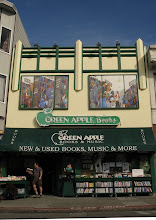
Friday, March 9, 2012

On Going Out-of-Print

What's the average lifespan of a book?

I'm not referring to the length of time a book can survive in a library or private collection, but the time between a book's publication and its eventual, inevitable obsolescence. How many novels published twenty years ago are still in print today? How many from two years ago, even? (At the moment, I'm only considering books published traditionally by publishing houses, not Print on Demand titles--even though POD technology is rapidly changing the way we conceive of the life cycle of a book.)

Without any recent statistics (or, rather, the motivation to dig them up), I'd be hard-pressed to come up with anything more than an educated guess, but I doubt I'd be too far off by estimating that 70-80% of books don't stay in print for more than a few years. If we limit the discussion to novels, I think this number may be even higher.

This isn't to say that a book's death is necessarily a tragic event--at least not for those of us who feel overwhelmed by the enormous quantity of books being published every year (close to 300,000 in the U.S. alone, according to UNESCO). A book's author suffers, I'm sure, and every book has at least one or two devoted readers who will lament its passing, but the fact is that most books are published, sell poorly, then fade into oblivion, perhaps to be resurrected later. It's the natural progression.

In the abstract, this all sounds like a fine argument for the obvious necessity of a sort of literary Darwinism, in which the fittest survive and the weaker go the way of the dodo. But as a bookseller, I've seen too many fine books slide into oblivion to believe that fitness, to extend the metaphor, is the most important characteristic of a book's continuing existence. Unless we're okay with equating fitness to sales figures (I'm not), what do we make of a masterpiece like Dino Buzzati's The Tartar Steppe--a novel as perfect and haunting as Albert Camus' The Stranger--being permitted to slowly fade into obscurity?* Or one of my recent staff favorites, Roland Topor's cult classic The Tenant, which we sold hundreds of copies of before it too became a ghost? Or, to use another personal example--and the impetus behind this post--what of Wilcock's Temple of Iconoclasts, a book Roberto Bolano called "one of the funniest, most joyful, irreverent, and most corrosive books of the 20th century"? (Our inventory tells me we have one left on the shelf, so if you want it, come and get it.)

By nature, this consideration is very personal: these are all books I've loved and done what I could to pass on to other readers. Yet they have nevertheless gone out-of-print. What's a bookseller to do in this situation? Feel guilty that I couldn't more convincingly persuade you to read them? Or feel humble pride that I was able to sell the copies I did? In a paradoxical sense, the guilt I feel is less for my inability to turn these books into bestsellers than it is for speeding them along the road to oblivion: if we'd sold fewer copies, they'd still be on our shelves--for a while longer, at least.

In the end, my only recourse may be to lament all the factors that lead to a book's death--the cost of printing, warehousing, and distribution; the sometimes odd constraints of acquiring rights; the difficulty of getting a book noticed among the avalanche of other books; our suffocating copyright laws. It's a helpless feeling, but more than ever, with the POD technologies mentioned above and the increasing digitalization of books, it may be that in the future we'll look nostalgically at the days when books had a lifespan. It may be that in a subtle way, the threat of disappearance is part of the reason we so cherish the books we love.


___

* Buzzati's novel is technically listed by its publisher as being Out of Stock Indefinitely, which is a polite way of saying "We're waiting to pull the plug." My inquiry to the publisher, David R. Godine, about the status of the book wasn't answered.

Thursday, March 8, 2012

The lit keeps quaking


I've been very excited to work with Litquake this year, co-producing their monthly reading series, Epicenter. At Tosca. That's right. . . Tosca Cafe, the hallowed North Beach watering hole.

The idea for Epicenter is actually to have a little less reading, and a lot more discussion - this is why we are booking two authors at the same time and encouraging them to shoot the breeze to our hearts' content. Please enjoy a couple of photos of last month's guest, Steve Erickson, above and below. Steve was in conversation with San Francisco journalist Kevin Berger, and it sure delivered!

Next on the Epicenter calendar is a double-header for the ages: Geoff Dyer and David Thompson! Thompson, the notable film historian (you may have heard of his The New Biographical Dictionary of Film - an absolute classic, now in it's fifth edition) will be the perfect cohort to Geoff Dyer, whose new book, Zona: A Book About a Film About a Journey to a Room takes on one of the greatest cinematic experiences of all-time, Andrei Tarkovsky’s Stalker. Each author has scads of books published, and this event is certainly not one to miss. Did I mention that it's at Tosca Cafe?

The Epicenter series has been very successful so far, which is a fancy way of saying, "Get there early, as seats fill quickly." Check our website for more details.

Sunday, March 4, 2012

Judging a Book by its Cover...

One of the tried and true clichés in the book world is the age old adage don't judge a book by its cover. Unfortunately, a lot of the time that's what my job requires. When buying remaindered books I rely on my knowledge of what sells in our store but also I take a chance on titles I don't know. I don't have the luxury of reading every book I see (at abook fair or warehouse I see up to a million titles in an eight hour day) and when a sales rep comes they usually bring only the covers. So a lot of times this is all I have to go on.

On the other hand sometimes that is just what a book needs as it's sitting on our new release tables. One of those books has been on various display tables since I saw the cover in the summer of 2006: Apathy and Other Small Victories by Paul Neilan (who has now become a friend of mine after a pretty fun reading we did with him. We have since sold 635 copies of the paperback, 150 remainder copies, and if I remember correctly almost 200 in the original hardcover edition....

I picked up this book after one look of the cover and didn't put it down after the first paragraph:

"I was stealing saltshakers again. Ten, sometimes twelve a night, shoving them in my pockets, hiding them up my sleeves, smuggling them out of bars and diners and anywhere else I could find them. In the morning, wherever I woke, I was always covered in salt. I was cured meat. I had become beef jerky. Even as a small, small child, I knew it would one day come to this."
I was in the middle of two other books when I walked past Tupelo Hassman's first novel, Girlchild, on our newly released hardcover fiction table. The library card over the trailer-home in the desert photo caught my eye and I picked it up and started reading:

"Mama always hid her mouth when she laughed. Even when she spoke too gleefully, mouth stretched too wide by those happy muscles, teeth too visible. I can still recognize someone from my neighborhood by their teeth. Or lack of them. And whenever I do, I call these people family. I know immediately that I can trust them with my dog but not with the car keys and not to remember what time, exactly, they're coming back for their kids. I know if we get into a fight and Johnny shows up we'll agree that there has been 'No problem, Officer, we'll keep it down.' "
From there I couldn't put it down. This is a dark, compelling, and poignant novel about a young girl and aspiring girl scout trying to escape the history of the women of her family and escape the Calle, a mobile-home town outside of Reno full of white trash, drunks, and the danger of being from a long line of damaged women.

- npb

Saturday, March 3, 2012

February's Apple-a-Month Club selection, or, the trouble with fiction

As our Apple-a-Month subscription service enters its fifth month, we've started to get a few more questions about what our criteria for an Apple-a-Month Club book is. Luckily, there's the vaguely composed something like a mission statement from the website behind which to dodge the question.

Our Apple-a-Month Club selections have very few guidelines: new, paperback fiction is the main criteria, and we endeavor to share something you might not pick up or hear about anywhere else. Other than that, you can expect a variety of literary genres and styles.

The most important part of that, to us, being something you might not pick up or hear about anywhere else. That's both because 1. we don't want to send you something you've already got and 2. we think (and hope) that part of the trust you've placed in us to select a novel a month for you comes from a curiosity about what you might be missing from the world of literature, a desire to try something new.

That said, we thought that the biggest challenges in this new endeavor would be drumming up subscriptions (not a problem, but keep 'em coming) or staying on top of new releases. While the latter has been a by-the-seat-of-our-pants operation to be sure, surprisingly (to me, at least), it's the "fiction" part that sometimes presents a problem.

The problem with fiction, for these purposes, lies in trying to find a fictional world with something approaching universality. While most novels deal with the same Big Stuff, many of the popular contemporary variety tend to anchor themselves in realities -- like "college", "war", or "Iowa" -- that a reader simply likes and relates to or does not. It is, perhaps, for this reason that our small list of past Apple-a-Month club books has so far tended towards the inner life, a subject matter that is just so vague and strange as to almost require a less than linear approach.

In Red concerned itself with the magical humming beneath the surface of a mythical Polish town. Leaving the Atocha Station's primary drama lies in a poet's struggle to find his voice and sense of place. And Invitation to a Voyage peeked into the delicate inner workings of the human search for a home and a purpose, timeless themes in fiction, in a manner both intimate and specific. All of these have been at least somewhat non-traditional, storytelling wise, but in each case that seems to be a response to the very problem we have in selecting recommendations: that fiction must simultaneously conjure a novel world and touch on something true. Trying to come up with books that do this for a few dozen people I've never met has been an unexpected and interesting challenge, one that has made me think about what makes fiction good and relevant in a way that I perhaps never would have otherwise.

February's book, then, epitomized and answered this challenge. It's a genre the author herself would describe as autofiction -- a term that is gaining some literary popularity in its original French to describe a sort of melding of the genres of memoir and fiction. In the case of trying to find a fiction book with a sense of universality to it, this is something of a dream -- because what is it about another's deepest personal experiences and responses that prompts a reader to peer into their own?

Here's our February Apple-a-Month pick: Gwenaelle Aubry's No One, and the accompanying shelf-talker, which more concisely explains its apt-ness and beauty than this long-winded musing I've stumbled into. Read it, buy it, subscribe, and join us in this strange experiment in how to recommend fiction to everyone.


Gwenealle Aubry's No One is a genre-straddling work of tremendous power. In attempting to come to grips with her father's descent into madness, Aubry breaks the boundaries of the traditional fiction/non-fiction divide, creating in the process a blend of memoir and novel. Constructed as a fragmented dictionary -- from Artaud to Woody Allen's Zelig -- this lyrical and heartbreaking work will challenge each reader to examine the ties that bind us to our family, to what it means to love someone who we may never understand.

Thursday, March 1, 2012

ARCs, hope, and regret

One of the joys of working at a bookstore is advance reader's copies--preview copies of forthcoming books. We get dibs. And we get about 30 dibs each week, so there are plenty from which to choose.

One of the curses of working at a bookstore is advance reader's copies. We don't let ourselves read Steinbeck or Stein or last year's hot title, because we feel an obligation to sort the forthcoming wheat from the chaff.

On the plus side, we get to read wonderful books that are soon to be great hits (like this or this), and we can eventually take some credit for evangelizing and helping them spread like wildfire.

And we can drop a book after 50 pages without guilt. We didn't buy it, so if it's no good, no hard feelings. On to the next book.

On the other hand, we get fooled sometimes. Before leaving for a (no checked luggage therefore only two books) trip to Nicaragua, I started a promising new novel set here in SF. It
made the suitcase. And it was awesome. For 225 of its 250 pages. It just didn't all come together, alas.

No big deal, right? But it displaced some other book that may be the next great thing.

Such is the anguish of the bookseller.

Shed no tears for me, though. The pile by my bed never wanes, despite regular "I'm never really going to get to this one" purges. Nor does my desire to read. And someday, maybe I won't work in a bookstore, and I can finally get to the classics I've missed.

Friday, February 24, 2012

Facts stand no chance


John D'Agata, a professor of creative writing at the University of Iowa, writes essays, but not the kind you remember composing in school. His particular style of essay--which he calls "lyric"--blends fact and, well, something on a continuum of fact and if not fiction, something more akin to it than nonfiction, to convey what he feels is the essence of what he's exploring. D'Agata's stance, which he argues is valid based on the etymological and historical sense of "essay," a verb synonymous with trial, test, and attempt, is that the Truth of a matter cannot solely be conveyed through empirically verifiable facts.

Some, including Jim Fingal, the Believer fact checker assigned to research the contentious essay at the center of this book, take issue with D'Agata's playing fast and loose with our mutually shared reality. Fingal, NY Times Book Review editor Jennifer McDonald, and others point to the troubling aspects of D'Agata's process, arguing that blurring the lines between fact and fiction may be aesthetically justifiable, but is morally questionable. D'Agata counters with the argument that he's never claimed to write non-fiction, only essays. And essays are a genre of their own, amorphous, personal, drawing on myth, poetry, and imagination as well as facts (as commonly understood) to portray the richness of life--or, in the case of the essay under the microscope here, death.*

These fundamental differences in opinion create a dynamic tension in this record of D'Agata and Fingal's dialogue about the essay in question, which would later become a critically lauded book, About a Mountain. What starts innocently enough, with a bright-eyed intern's attempt to iron out some seemingly straightforward facts (are there 31 or 34 strip clubs in Las Vegas?), by the end has taken on a much larger meaning, becoming a tense ideological and aesthetic battle about the nature and value of art, truth, and meaning.

The text on the page of Lifespan of a Fact is neatly arranged, with the back-and-forth between Fingal and D'Agata surrounding the essay, marginalia that overwhelms the text. I'll refrain from drawing my own conclusions here, but am curious as to what other readers think, whose side you fall on. Are facts negotiable? Do they matter in a work of art? Is truth only what's verifiable, or are there truths of feeling? These are big questions, of course; Lifespan of a Fact is a compelling contribution to this age-old debate.


__

* The argument D'Agata makes would be more acceptable in France, where a genre-bending category of literature called l'autofiction has become increasingly common in recent years.

Monday, February 20, 2012

Blind Items: Bay Area Author Edition

Just like the celebrity gossip blogs except mild-mannered and fun, without indiscrete stories of drug dependence and promiscuity.
And all the facts come from totally legit sources, author websites and Twitter.

1) What disciplined, UC Irvine grad, aka August Van Zorn, sometimes seen in Peterborough, New Hampshire or Oakland Burma Superstar, once turned down an offer to appear in "People Magazine"’s “50 Most Beautiful People” issue?

2) What local psychiatrist, a Katherine Dunn and Fredric Brown fan, sometimes compared to Carl Hiaasen, whose first hard-boiled thriller was optioned as a Leonardo DiCaprio vehicle, and has a recently published a footnoted sequel that begins “Ishmael—Call me,” -- owns a Boston terrier named Lottie, aka “Sweetiebunch”?

3) This "RuPaul’s Drag Race" fan, former chauffeur, once a student of Robert Coover and Edmund White, whose last novel takes place in the Sunset District, currently teaches in Iowa City, (but he talks live with Roz Chast on City Arts and Lectures in June). His next book is getting spiffed up by Stephen King editor Lee Boudreaux at Ecco Press.

4) This Outer Sunset District-residing scuba diver, and author of 50 books, 30 of them for young adults, dedicated his 2008 novel (in which John Steinbeck friend- Ed “Doc” Ricketts features heavily, to a dive boat operator. One of the tattooed writer’s vampire-themed titles was once listed ninth in "Entertainment Weekly"’s list of best horror books.

5) This Peninsula professor, and former Raymond Carver co-worker, was expelled from prep school. His perennially class-listed memoir was brought to screen starring Robert De Niro as the alcoholic dad. The professor’s mom once led the League of Women Voters.

6) This SoMa-residing clarinetist and former ACT-Uper, reads at Magnet Book Club on March 26.


7) The first chapter of this former newspaper serialist’s beloved Russian Hill-based stories was pub’d in Marin’s Pacific Sun. Upon it’s first "SF Chronicle" appearance, a drunk Rock Hudson read the story aloud to friends (including the author), in his Fairmont Hotel room in (big hint) 1976. True story!